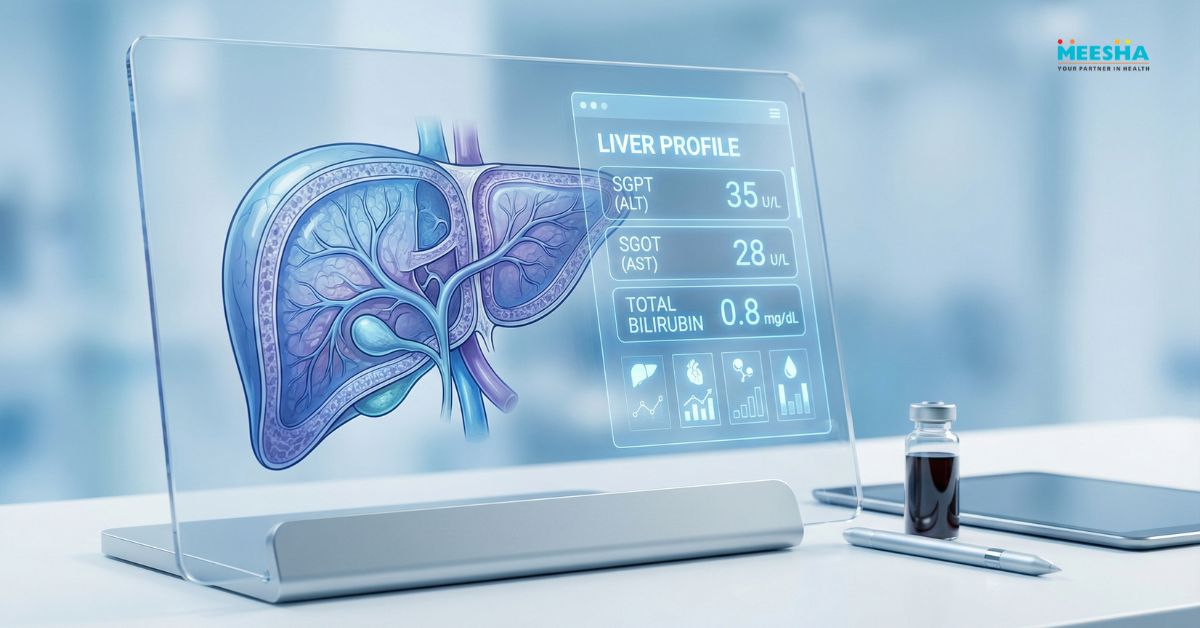
A liver profile test is one of the most important blood investigations for assessing liver health, yet many patients struggle to understand their reports. Numbers marked high or low often create unnecessary anxiety.
This test does not look at one value in isolation. Instead, it evaluates multiple liver enzymes and proteins together, giving doctors a complete picture of liver function. When interpreted correctly, a LFT helps detect liver disease early, monitor ongoing conditions, and prevent long-term complications.
This guide explains when a LFT is required, what each parameter means, liver function test normal levels, reference ranges, and what abnormal results actually indicate.
Table of Contents
What Is a Liver Profile Test (LFT) and Why It Is Done
A LFT is a panel of blood tests used to evaluate how efficiently the liver is working. It is commonly prescribed during routine health checkups or when liver-related symptoms are suspected.
The liver performs critical functions such as:
- Filtering toxins from the blood
- Producing bile for digestion
- Regulating cholesterol and proteins
- Processing medicines and hormones
Because early liver damage may not show symptoms, a LFT or Liver Function (profile) Test often detects problems before they become serious.
When Do You Need a Liver Profile Test
Doctors recommend a liver function test under several clinical and preventive situations.
Symptoms That May Indicate Liver Issues
- Persistent tiredness or weakness
- Yellow discoloration of eyes or skin
- Dark urine or pale stools
- Nausea, poor appetite, or bloating
- Pain or discomfort on the right upper abdomen
Medical Conditions and Risk Factors
- Diabetes, obesity, or fatty liver disease
- Regular alcohol consumption
- Viral infections such as hepatitis
- Long-term use of medicines affecting the liver
- Abnormal findings in routine blood tests
Many liver disorders are detected incidentally during preventive health screenings.
Parameters Included in a Liver Function Test
A liver function test includes multiple parameters, each reflecting a different aspect of liver health.
SGPT SGOT Test
SGPT (ALT) and SGOT (AST) are liver enzymes released into the blood when liver cells are damaged.
- Raised levels may indicate fatty liver, hepatitis, or alcohol-related injury
- Mild elevation can occur due to infections or medication use
Bilirubin Test
The bilirubin test measures a pigment formed during red blood cell breakdown.
- High bilirubin levels cause jaundice
- Elevation may suggest liver disease, bile duct blockage, or blood disorders
Alkaline Phosphatase (ALP)
- Helps assess bile duct function
- Raised levels may indicate obstruction or inflammation
Albumin and Total Protein
- Reflect the liver’s ability to produce essential proteins
- Low values may point toward chronic liver disease
Understanding how these values relate to each other is more important than focusing on a single abnormal result.
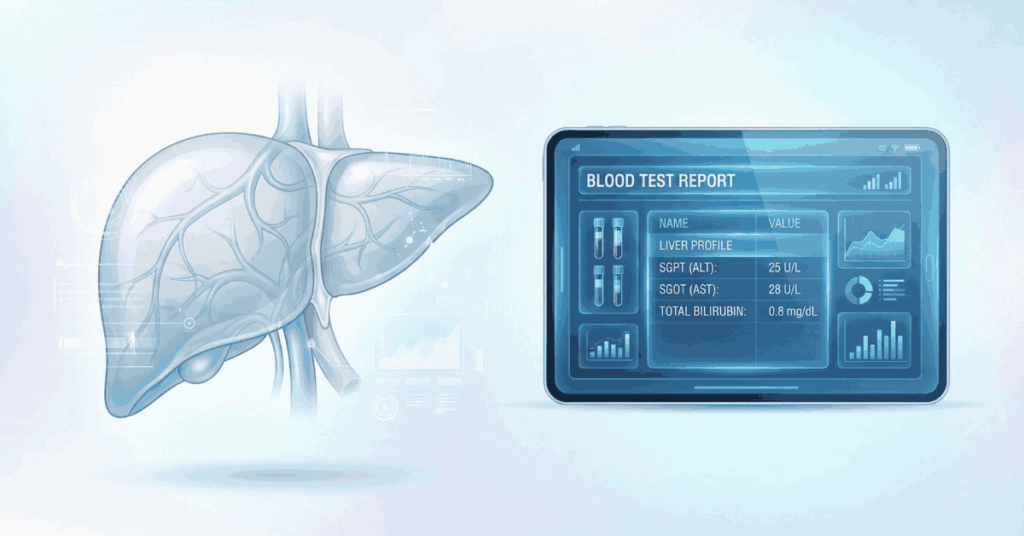
Liver Function Test Normal Levels and Reference Range
Below are commonly accepted liver function test normal levels. Actual values may vary slightly depending on the laboratory.
- SGPT (ALT): 7–56 U/L
- SGOT (AST): 10–40 U/L
- Alkaline Phosphatase: 44–147 IU/L
- Total Bilirubin: 0.3–1.2 mg/dL
- Albumin: 3.5–5.0 g/dL
Doctors interpret results based on symptoms, medical history, and trends rather than isolated numbers. The liver function test reference range is only a guideline.
What Abnormal Liver Function Test Results Mean
An abnormal liver profile does not always indicate serious disease.
Mildly Elevated Enzyme Levels
Often associated with:
- Fatty liver
- Temporary infections
- Recent alcohol intake
- Medication-related changes
Lifestyle correction and follow-up testing usually normalize values.
Significantly Abnormal Results
May suggest:
- Acute or chronic hepatitis
- Alcohol-induced liver damage
- Drug-related liver injury
- Bile duct obstruction
Further investigations such as ultrasound or viral markers are typically advised.
Liver Profile Test Cost in Mumbai
The cost of a LFT in Mumbai usually ranges from ₹500 to ₹1,200, depending on:
- Number of parameters tested
- Laboratory standards and accreditation
- Home collection services
Reliable diagnostics ensure accuracy, which is critical for correct medical decisions.
Preparation Before a Liver Profile Test
Simple preparation improves test accuracy:
- Fasting for 8 to 10 hours is commonly recommended
- Avoid alcohol for at least 24 to 48 hours
- Inform the lab about ongoing medications
Following instructions ensures dependable results.
Choosing the Right Diagnostic Centre
A LFT should always be performed at a trusted pathology lab with quality controls in place.
You may also find these resources helpful:
- Blood Test Guide: https://meeshahealth.net/blood-check-near-me-cost-process-preparation/
- Best Pathology Labs: https://meeshahealth.net/best-pathology-labs-near-me/
Frequently Asked Questions (FAQs)
What is the difference between liver profile test and LFT?
Both terms are commonly used interchangeably. A liver profile test usually includes a comprehensive set of liver parameters.
Can SGPT SGOT levels increase temporarily?
Yes. Infection, exercise, medicines, or alcohol intake can cause temporary elevation.
Is bilirubin always high in liver disease?
Not always. Bilirubin may remain normal in early-stage liver conditions.
How often should a liver profile test be done?
Frequency depends on medical condition. High-risk individuals may need periodic monitoring.
Can normal values still indicate liver disease?
Yes. Some liver conditions may show normal values initially, requiring imaging or further tests.
Conclusion
If you have symptoms, risk factors, or abnormal blood results, do not delay evaluation. Book a LFT in Mumbai at a reliable diagnostic centre and take timely steps to protect your liver health.